By: Buhle Mbhele
Leaders of the 16 member countries of the Southern African Development Community (SADC) have adopted three legal instruments which they believe will accelerate regional integration and enhance coorperation amongst the Member States.
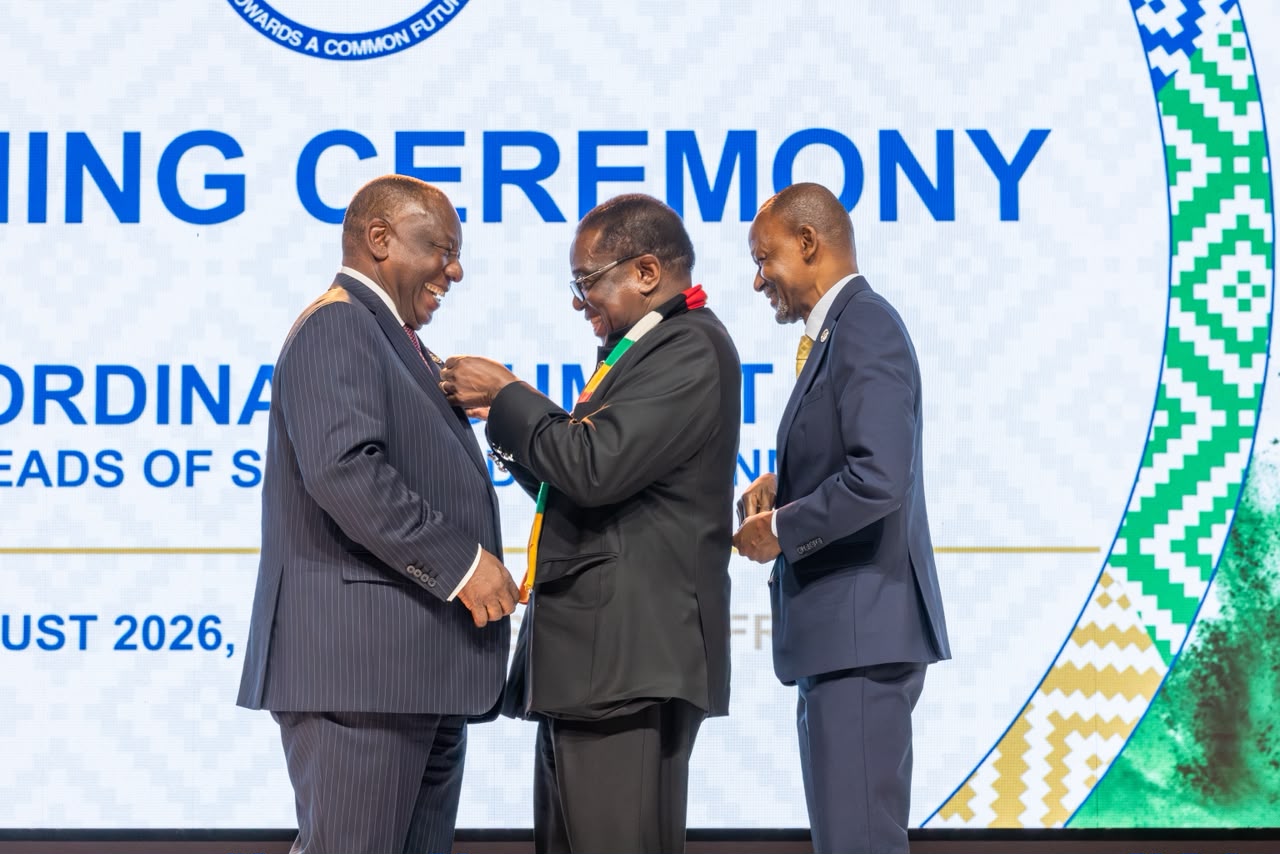
The frameworks are the SADC Protocol on Trade, Protocol Against Trafficking in Persons and Tourism UNIVISA. In August between 3-17 South Africa hosted a series of events for SADC building up to the 46th Ordinary Summit of SADC Heads of State and Government which was held in Durban, KwaZulu Natal.
The events included the 9th Annual SADC Industrialisation Week which focused on strengthening regional industrial value chains and discussions about trade within the region, industrial competitiveness and production.
This was followed by the Council of Minister Meeting which was chaired by South Africa’s International Relations and Cooperation Minister Ronald Lamola. Lamola who was also elected as Chairperson of the Council, with his tenure stretching to August 2027.
These meetings proceeded the main gathering consisting of Heads of State, chaired and hosted by President Cyril Ramaphosa.
Key to what was discussed by the leaders was the issue of migration which has been a cloud hanging over South Africa for month. Exacerbated by demonstrations of several civil rights groups such March and March against the influx of illegal immigrants, the further led to several criminal activities.
Mass deportations took place as seen in Sherwood, north-west of Durban where thousands of Malawi nationals were camping at a recreational area seeking to be repatriated to their home country in fear of the June 30 deadline set by civil movements.
These scenes shined a spotlight to South Africa, pushing for migration talks to take place and government to swiftly implement mechanism to control the issue in efforts to avoid potential tension between the countries.
However, government was left with a big task of having to ensure SADC member states that their citizens will not be harmed and the issue is being handled adequately.
These events set the tone of the gathering, making the issue of migration as a central and most prevalent theme of the summit.
“Migration accounts for much of the diversity, vibrancy and richness of this region. Now, as we work towards our Vision 2050, we should seek a region in which people are able to freely move according to established principles, protocols and laws.”
“This means that we must work together to address the conditions that drive migration. We need to work together to address conflict, instability, governance failure, poverty and social discord.”
“We need to create equal economic opportunity and build inclusive institutions of governance.We seek a region where people move out of choice, not out of desperation.”
“None of what we seek for our region is achievable without peace.” said President Cyril Ramaphosa while delivering a Public Lecture at the University of KwaZulu Natal on Friday.
However, the most pivotal pointers for the SADC countries is what the leaders agreed on following hours of engagement and here is what you need to know:
1. They have approved the Agreement Establishing the SADC Tourism UNIVISA, this will focus on the regional visa which will allow smooth movement of goods and people between SADC member states.
2. SADC Protocol Against Trafficking in Persons, this framework will be instrumental in fighting border related crimes where coordinated regional response involving law enforcement, immigration and other authorities will come into play.
3. SADC Declaration on the Protection of People with Albinism, this was originally adopted in 2019 and has been signed as a declaration and will bring measures to protect persons with albinism and strengthen their safety and rights.
4. SADC Declaration on Accelerating Action to End AIDS by 2030 which has been marked as a public health threat aims to bring an end to AIDS.
5. SADC Regional Development Fund – this will be a financing tool which will be used to finance projects and programmes which will be economically beneficial to the region.
6. Amendment of the SADC Treaty – Article 33 of the the treaty was agreed upon that it be amended. It was firstly signed in Namibia in 1992 and has some changes which are, member states who have been in arrears for four years or more can be suspended. This treaty provides a framework for the formation on what are the rules, guidelines and disciplinary measures in place to deal with arising issues within the region.
“Our decisions must be implemented. They must be properly costed, funded, assigned and monitored.Our communiqués must become construction sites, factories, power lines, water systems, laboratories, businesses and jobs.” – said Ramaphosa.
South Africa now holds the Chairpersonship of SADC till the 47th SADC Summit of Heads of State and Government which will be held in the Republic of Zambia.